


AI interview practice tools have become one of the fastest-growing categories in job search technology. In 2026, candidates use AI to practice behavioral answers, debug coding solutions, simulate mock interviews, prepare system design explanations, and review mistakes faster.
But there is a right way and a risky way to use AI. The best use case is preparation. AI can help you learn faster before the interview. It should not replace your thinking during an assessment or create answers you cannot explain.
This guide explains how to choose an AI interview practice tool, what features matter, and how to use AI ethically for better interview performance.
Key Takeaways
- AI interview tools are most valuable for practice, feedback, and structured review.
- Look for tools that support coding, behavioral, technical, and system design practice.
- Good tools help you explain reasoning, not just generate answers.
- Ethical use means improving your skill before interviews, not misrepresenting your ability.
- Trust matters: privacy, transparency, and realistic feedback should guide your choice.
What Is an AI Interview Practice Tool?
An AI interview practice tool helps candidates prepare for interviews by simulating questions, reviewing answers, identifying weak areas, and generating targeted practice. Some tools focus on coding, while others specialize in behavioral interviews, communication, or system design.
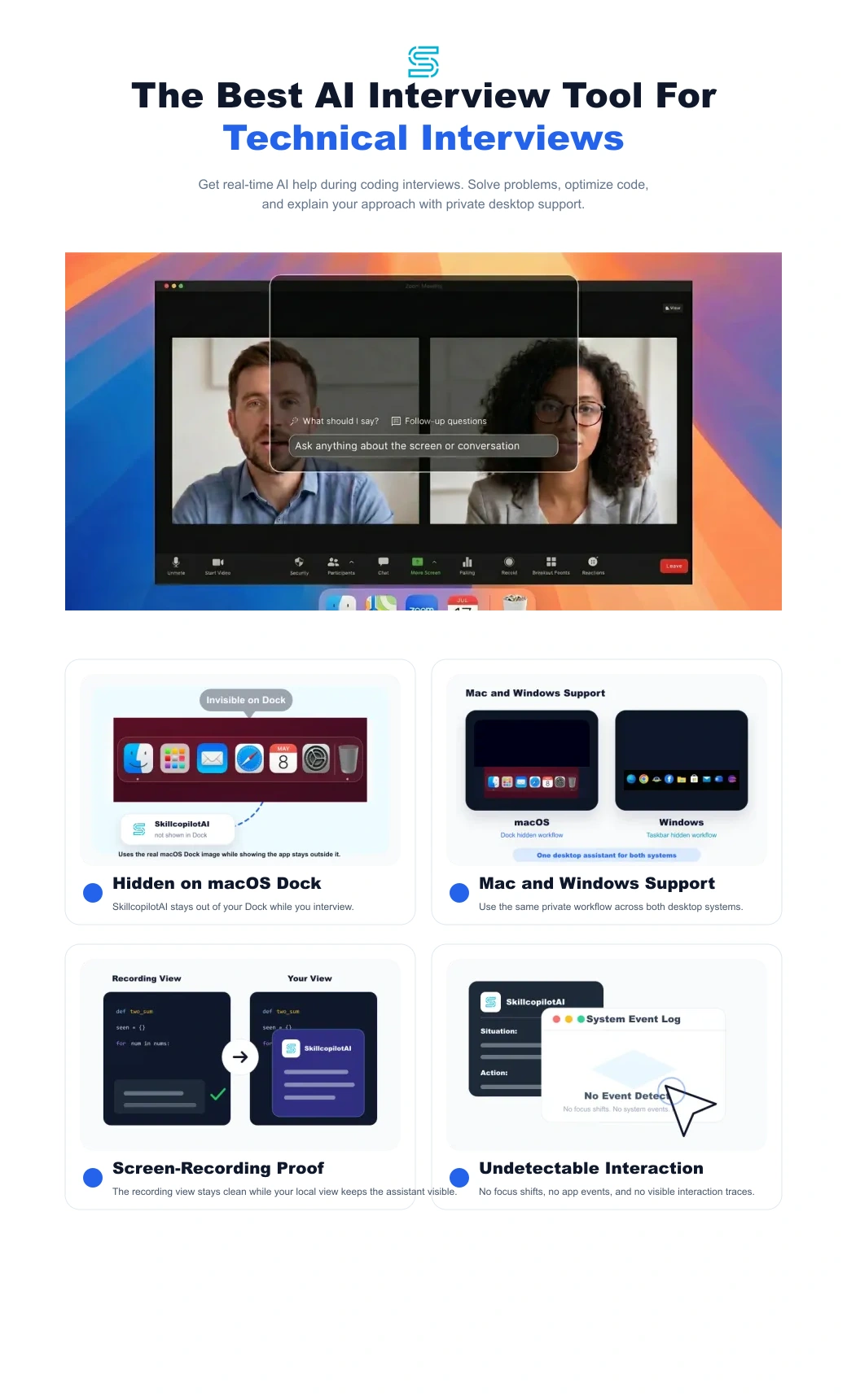
Common features include:
| Feature | Why it matters |
|---|---|
| Mock interviews | Builds confidence under pressure |
| Coding feedback | Finds bugs and edge cases |
| Behavioral coaching | Improves structure and specificity |
| System design prompts | Trains architecture reasoning |
| Resume-aware practice | Makes answers more relevant |
| Progress tracking | Shows weak areas over time |
Features to Look For
1. Role-Specific Question Sets
A strong AI interview practice tool should adapt to the role. A backend engineer, data analyst, product manager, and new-grad software engineer need different practice.
Look for support for:
- Software engineering
- Data engineering
- Product management
- Finance technology
- Behavioral interviews
- System design
- Coding assessments
2. Feedback, Not Just Answers
If a tool only gives you polished answers, it may feel helpful but teach very little. Better tools explain what is missing, where your reasoning is weak, and how to improve.
Useful feedback includes:
- Specificity
- Structure
- Technical depth
- Edge cases
- Time complexity
- Communication clarity
3. Coding Interview Support
For coding interviews, the tool should help you understand prompts, debug solutions, analyze complexity, and generate similar practice problems.
Good coding practice prompts:
- "Find the bug in my solution."
- "List hidden test cases."
- "Explain the optimized approach."
- "Generate a similar problem with a different story."
4. Behavioral Interview Coaching
Behavioral answers should not sound generic. A good tool helps you turn real experiences into clear stories.
It should help with:
- STAR structure
- Quantified results
- Role relevance
- Follow-up questions
- Concise delivery
5. Privacy and Trust
Interview preparation often involves resumes, work history, and personal stories. Choose tools that treat privacy seriously. Avoid pasting sensitive company secrets, private code, or confidential documents into any tool.
Live assistants require an extra layer of judgment. Our research-based Parakeet AI review examines interview-specific policy and privacy tradeoffs, while the Cluely AI review looks at a broader meeting assistant whose live suggestions may also appear attractive to candidates.
If you are considering real-time listening rather than practice, read our guide to AI listening to interview questions and suggesting answers before deciding whether the employer's rules, consent requirements, and privacy terms allow it.
Ethical Ways to Use AI for Interview Prep
Use AI to:
- Practice before interviews
- Review your answers
- Generate study plans
- Find weak areas
- Simulate follow-up questions
- Improve clarity
- Learn from mistakes
Avoid using AI to:
- Misrepresent your ability
- Copy answers you do not understand
- Share confidential company information
- Depend on hidden assistance in assessments
The goal is to become a stronger candidate, not to create a performance you cannot reproduce.
AI Interview Practice Workflow
Step 1: Upload or Summarize Your Background
Provide your target role, seniority, projects, and weak areas. Do not include confidential details.
Step 2: Run a Mock Interview
Ask for a realistic interview loop: behavioral, coding, system design, and follow-up questions.
Step 3: Review Feedback
Turn feedback into a short mistake log. Track repeated issues.
Step 4: Generate Targeted Practice
Ask for questions that focus only on weak areas.
Step 5: Repeat Under Time Pressure
Practice with timers. Interviews reward clarity under pressure.
If you want a day-by-day routine instead of another tool list, follow the seven-day AI mock interview practice guide and use the same review criteria across every session.
FAQ
Are AI interview tools worth it?
They can be worth it if they provide feedback, role-specific practice, and realistic follow-ups. They are less useful if they only generate generic answers.
Can AI help with coding interview preparation?
Yes. AI can explain prompts, review code, identify edge cases, and generate similar practice problems.
Is it ethical to use AI for interviews?
Using AI for preparation is ethical. Using it to misrepresent your ability during an assessment is risky and can violate hiring rules.
Final Thoughts
The best AI interview practice tools help you build real interview ability. They make feedback faster, practice more targeted, and preparation less lonely. Choose tools that improve your reasoning, communication, and consistency. That is the AI advantage worth having.
Continue preparing
Editor selected
Parakeet AI Review 2026: Pricing, Pros, Cons & Verdict
Parakeet AI review covering pricing, credits, live interview features, limitations, and a sourced comparison with SkillCopilotAI to help you choose.
Editor selected
Cluely AI Review 2026: Features, Pricing, Privacy, and Verdict
Is Cluely worth it? This research-based review examines its live meeting features, current pricing, privacy terms, limitations, and best-fit users.
Editor selected
HackerRank OA Preparation Guide 2026: Question Types, Practice Plan, and Tips
Prepare for a HackerRank OA in 2026 with current question types, coding and SQL patterns, a focused 7-day practice plan, timing tactics, and test-day tips.
Same content type
Can AI Listen to Interview Questions and Suggest Answers?
Learn how real-time AI interview assistants listen to questions and suggest answers, their accuracy and privacy limits, and when live use may be permitted.
Ready to ace your next technical interview?
Join thousands of candidates who landed their dream jobs with SkillCopilotAI.